
Art | Work
- clareecameron
- Jun 23
- 10 min read

If enterprise in its purest form is about executing on great ideas, creating value, working with teams, inspiring customers and making a cultural impact, then business might just be the greatest art of all.
This post gets an MFA to help the MBAs, reports on orchestration, recalls the world’s first abstract (female) painter, rewatches a 1970s BBC miniseries and looks through an artist's eyes.
“Being good in business is the most fascinating kind of art.”
-Andy Warhol
Way back in 2004, Daniel Pink declared in a Breakout Ideas series for the Harvard Business Review that the Master of Fine Arts was on a fast track to become the new MBA. He wrote about recruiters from the world’s leading business firms visiting arts schools in an attempt to find creative talent that could make their offerings “transcendent—physically beautiful and emotionally compelling.”
Those were the days. Fast forward to 2026 and a typical MBA graduate earns significantly more than an MFA, with a starting salary gap that may exceed $100,000 annually in Canada. Steve Jobs is dead and Bill Gates is divorced. We still have Mark Zuckerberg and Elon Musk though, and AI makes art now, along with everything else that people used to create with their actual brains. We are living longer than ever, and uniquely miserable. “Art Galleries are Not OK,” and the stock market is doing great.
Amy Whitaker is an Associate Professor of Visual Arts Administration at NYU Steinhardt and a frequent opinion writer on the intersection between art, business and politics. Her second book Art Thinking takes a deep look at art and business and concludes that it’s “hard to know which one is which.” Whitaker brings harmony to the Art vs. Work divide, and her perspective is a relief.
To truly disrupt the status quo and make a major advance, artists AND business leaders need what Whitaker calls ‘studio time,’ an “empty space in the landscape of your life” or within your organization.
Daring to make a giant oil painting or a detailed drawing is “an act of willful inefficiency” just as spending time together with a team to enjoy coffee, meet over breakfast, or do silly team building activities in a park might be considered frivolous. Whitaker argues that building studio time in to your daily operations is an important and unconventional investment in your business and its outputs.
Forbes is on her side: in 2026, the scope and scale of executive retreat experiences is set to grow and shows no sign of stopping. Smart organizations are investing time in giving their people a break, providing spaces and experiences that allow leaders to get grounded, feel and think differently for a while.
Studio time lets us breathe and think so new ideas can come through. It is your “personal R&D department” and a beautiful thing to protect.

“You are a valuable instrument in the orchestration of your own world, and the overall harmony of the universe.”
-Suzy Kassem
For a means of musical production, the modern orchestra is a bit ridiculous. A full-scale symphony orchestra may include up to 120 different players and 15 types of instruments. Orchestras require carefully designed spaces and halls with effective acoustic design. They are expensive to run and rarely turn a profit. Most of the accomplished musicians inside of an orchestra work multiple jobs to make ends meet, while traditional audiences age, decline and literally die.
70 years ago, long before Spotify, Kent Wheeler Kennan wrote The Technique of Orchestration as a straightforward manual for music composition students who intended to write scores for a full orchestra.
I’m not the first person to analogize conducting a symphony with leading an organization: The Third Zone coaching group provides one recent example, and the 2023 release of Maestro sparked a flurry of articles on the conductor-CEO parallel. Even without Hollywood glamour, a straightforward text like Kennan’s can be read with organizations in mind, and hold some lessons for the health of a business.

Each instrument has a unique pitch, range and tone. Other realities of their construction create capacity and constraints that influence orchestration. Strings do not depend on the length of a human breath to make sound, and don’t need pauses to empty spit valves or soak reeds. Their capacity to play infinitely and proximity to human vocal production is partly why a string section is often the biggest and most often playing section of an orchestra. They are the front line if you will, or the factory floor; whatever you might think of as the backbone in an organization.
Yet strings can’t produce harmony without structure and guidance. Every orchestral section needs specific notation in the score that should include dynamics, bowing techniques, sound quality and emphasis. For woodwinds and brass this might include notes and symbols about how and when to breathe, whether or not to break notes, and if a mute or modulation is used. The orchestrator needs to anticipate and communicate all the possible technical information players will need, in advance, to reach the fullest possible expression.
Orchestration needs to make clear what is the POINT of all this sound, and where is its focus. Each player through a movement who follows a single line in the score needs to understand this too: which section is leading at which time, who is carrying the main point forward, is there balance along the way, and how will it all conclude.
When working towards an ambitious goal, don’t we often fall in to the trap of thinking more effort, constantly, without cease, will produce the greatest results? And yet in the example of a well-balance orchestral composition, there is room to rest. There is negative space in each empty bar that allows another instrument to sing, and time where you can recharge as a player.
Rests are active time also. Players who are not making sound might be doing all kinds of other things: tuning, conditioning their instruments, tightening or loosening a bow, changing mouthpieces, LISTENING and counting, preparing for their next entrance.
How important is this lesson too: that even when we are not explicitly engaged in (sound) production, we are still very active, and may be doing the preparations that are necessary to enter an operation even stronger and more in tune with a central theme.
“I am an atom in the universe that has access to infinite possibilities...and it is these possibilities I want, gradually, to reveal”
-Hilma af Klint
Hilma af Klint is a borderline outsider artist who is now enjoying a reconsideration as the art world reckons with the exclusion of women from the ‘canon’ for so many years.
The Guggenheim featured her large-scale multicolour paintings in a major exhibition in 2018. Driven by mystic and spiritual inspiration along with the latest in scientific discoveries through the late 19th and early 20th centuries, af Klint is now recognized as one of the world’s first non-representational, abstract painters. Her geometric shapes and fields of colour pre-date Kandinsky, Klimt, Malevich and Mondrian. Weirdest of all for the Guggenheim show, it also realized af Klint’s vision that her works would some day be shown in a circular temple.

Science was in an expansive state, and af Klint’s imagination stretched even further. The explicit visual connections between her art and late 20th century astronomical photography are remarkable to see given that af Klint lived generations before this technology existed.
Imagine how magical the telephone must have seemed for people who dabbled in the occult and wished to communicate with others across long distances. One didn’t need telekenisis to do this any more, you just needed a phone line. Could x-rays also explain clairvoyance? Could subatomic particles explain the feeling of presence from an apparition? Could microscopy locate the soul? Af Klint’s art was and still is in conversation with such questions.
At the time, occultists and mystics like af Klint borrowed the rhetoric of science for legitimacy. Pseudoscientific imaginings about what subatomic particles could look like and how they might work used science as a jumping off point for visual material and creative expression.
Unfortunately, this undermined how seriously the art world would regard her work. Af Klint already faced an uphill battle as a female artist, and her association with mysticism worsened the situation. If created through spiritual practices instead of in a ‘pure’ artist’s studio, af Klint’s work was only a series of interesting pictures and not really ‘art’ at all.
While not exactly accepted by the art world, af Klint created her own professional networks, found a spiritual community, and aimed to build a temple for her works as an alternative to the gallery system that was dominated by men. The 2018 Guggenheim show was the highest selling exhibition in the gallery’s history and finally provided a spiraling building for her works. In this stand-in for her visionary temple, af Klint’s “paintings of the future” found a home at last.
Take a Look
However you define it, art engages us in the simple act of looking and noticing, getting out of our heads to ask what do you see?
This is a great question to ask of yourself also, through personal reflection. There is a strong power in being able to notice something, take a moment and pause. It’s an important exercise to take time, really look at something and think.
John Berger built a BBC miniseries and follow-up book around Ways of Seeing in 1972. It was a direct response to the grandiosity of Kenneth Clark’s Civilization and offers a Marxist take on the monumentality of Western art and its cultural remnants.
Across four episodes that are now available on YouTube, Berger appears as a deadpan narrator with contrarian views and Jagger-esque looks. His commentary includes plenty of silence where viewers are expected to pause and take space to enjoy the simple act of looking, thinking and responding to the power of images.
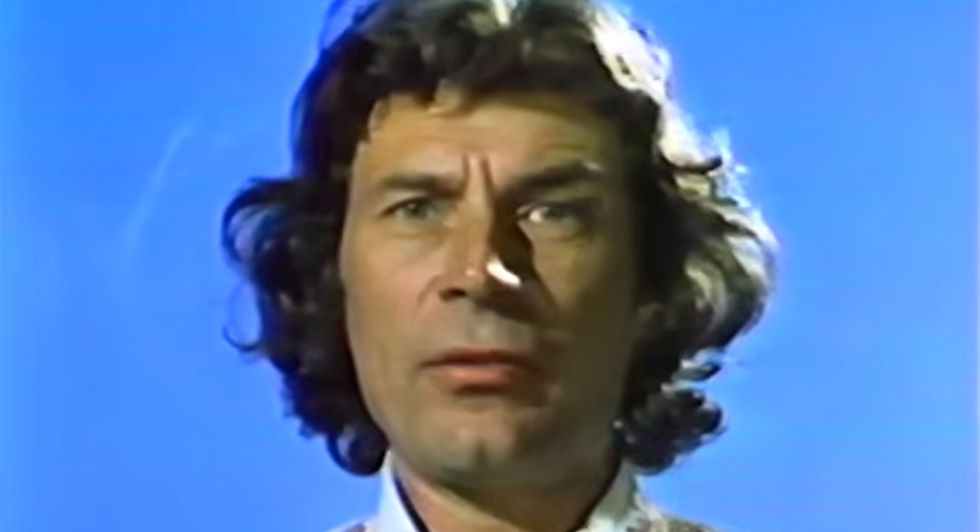
Even in the 1970s Berger saw how saturated people were with visual culture. Print technology, photography and video (long before TikTok!) allowed the reproduction, sharing and distribution of imagery with a scale and reach that had never existed before. Without advances in printmaking and photography, art images needed to be seen in a particular place and time if they were viewed at all.
Because images are transmissible, whatever meaning they hold is portable information now. Each component of a painting then becomes a potential message. Images are pieces of information that we can receive through new media that has the power to shape our behaviour and emotions.
Berger plays a little trick to prove this point. Using Van Gogh’s painting Wheatfield with Crows, he innocently describes the colours and sense of movement in this landscape. Then Berger drops the fact that this is the last picture Van Gogh finished before he killed himself.
Episode 2 is probably Berger’s most famous work because it provided the spark for Laura Mulvey to coin “the male gaze” as a major factor in art history and criticism in 1975. Seventeen years before the Guerrilla Girls made their point about nudes in the Met on New York City buses, Berger raised a big bushy eyebrow about the female body as an artistic trope. What a guy.
Kenneth Clark believed that being naked is simply being without clothes, while being ‘nude’ is a form of art. Berger sees it very differently, that being ‘nude’ is a form of objectification: “To be naked is to be one’s self. To be nude is to be seen naked by others and yet not recognized for one’s self. A nude has to be seen as an object in order to be a nude.” In the canon of European art, nakedness was a sight for those who are dressed and possess a power as viewers that the subjects of paintings do not hold.
Berger jumps from Manet’s Le Dejeuner Sur L’Herbe to the role of nakedness and shame in the Garden of Eden. Then he invites a round of female guests to share their thoughts about Manet’s weird masterpiece. Says one observant lady, “It’s a humiliating position and these women are aware of being humiliated….most people have had some sort of nightmares about running through the streets with nothing on and everybody else is dressed. And this is one element in the pictures.”
Berger also digs below the surface of 17th century European still life painting. Artists working in this genre depicted luxury objects and natural produce with incredible realism and technical detail. Viewers can appreciate these paintings for their aesthetic appeal and rich colours; each canvas looks delicious, abundant and over the top.
Then Berger dives in to point out how these images include stories about labour, commerce, shipping and trade. Each tapestry, mirror, vessel, flower and food product came from the workshops of weavers, embroiderers, carpet makers, mosaic layers, leather workers, jewelers, seafarers and farmers. He finds in still life pictures the evidence of bustling, booming, highly capitalist markets. These are the early modern equivalent of haul videos, smoothie bowls and humble brags. News flash people: Instagram didn’t invent the lifestyle flex.

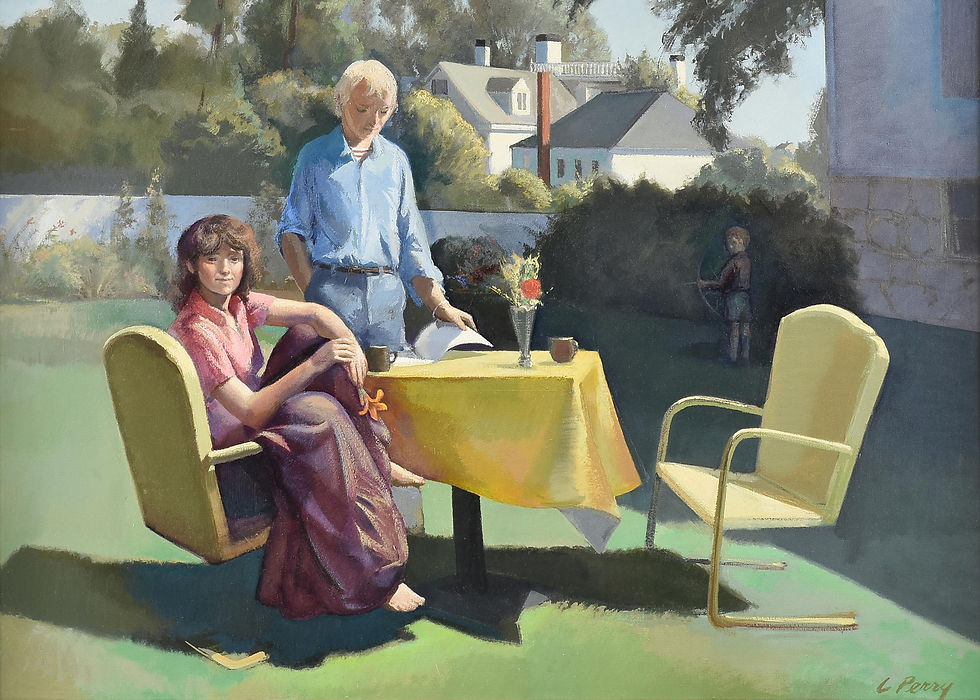
In a gentler style and with far less Marxism, the painter Lincoln Perry invites us to “see what calls to you” and makes “a plea to look closely” by sharing how he experiences art. He starts with a memory of seeing Bellini’s St. Francis of Assisi in ecstasy at the Frick in 1969 as a raging hippie who despite no upbringing in the church, identified with Francis’ serenity and willingness to rebel against convention.
As with Berger, the most important thing Perry hopes for us is to simply take time to look closely at works of art and notice what we see. While Berger finds the pressures of capitalism all around the experience of art, Perry notices more aesthetic visual connections and throughlines from Monet to Corot and Poussin to Ancient Rome. He catches a visual conversation between the shapes of Kandinsky and the proportions of Brueghel. And he contrasts Jackson Pollock’s aim to cram canvasses full of painterly action with the full field religious compositions of Jacopo Pontormo.
Paintings can teach us to see by sharing common visual elements and references. Physical materials and colours from lapis lazuli to gold leaf and ochre also tell stories. Perry’s way of seeing is much more straightforward than Berger, and one that Frank Stella might have approved of: in his words, or maybe Hemingway’s, “what you see is what you see.”
Perry wants to challenge the power of prevailing stories and stay open always to alternative takes. For business, this is another reminder of the need to be clear and flexible, grounded and open, determined and bendable. It’s a tall order to balance all the tension between these powerful points. The fine art of business should be up to the task.
This excerpt is from a longer newsletter.
Sign up for updates and subscribe at clarecameron.ca


Comments